Henry Wade
Wade: The Dying Alderman
Wade: The Dying Alderman
Couldn't load pickup availability
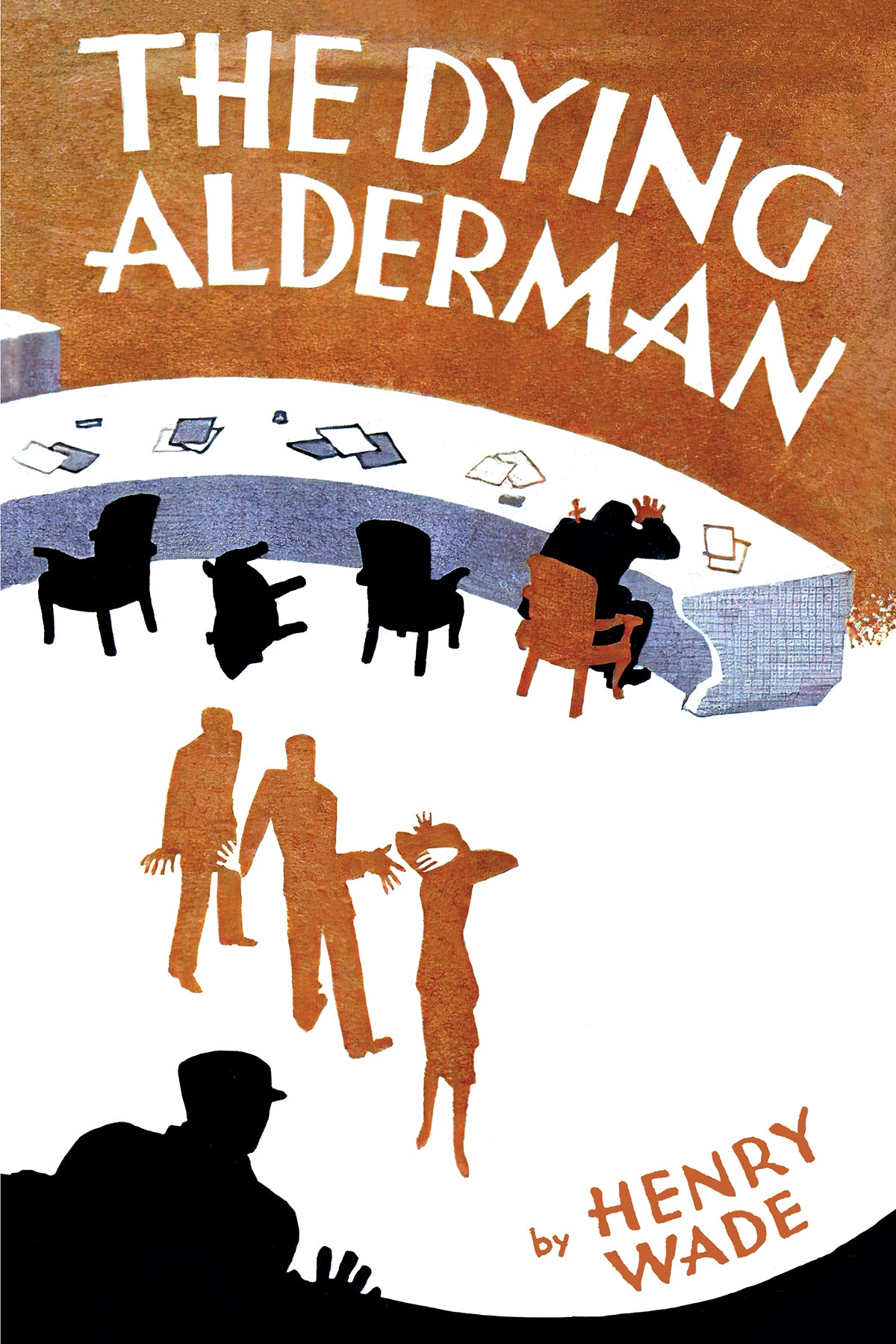
Charles Race, newly-appointed Chief Constable, watched the proceedings of the Quenborough city council from the balcony as tempers flared and accusations of graft flew from one member to another. A recess for tea was meant to improve the atmosphere, but Alderman Trant’s wife soon appears at Race’s tea table, crying out that her husband has been murdered! In a matter of minutes after the meeting had adjourned, Trant was stabbed at his desk in the council room. Race soon realizes that a warren of stairways and exits, and multiple potential suspects, set the stage for a puzzling mystery. Calling in help from Scotland Yard, he starts on the trail of a murderer—but the unexpected twists and turns will hold the reader until the very last page. The Dying Alderman, by Henry Wade (pseudonym of Major Sir Henry Lancelot Aubrey-Fletcher, 1887-1963) was published in 1930.
1932 Review
The gruesome figure of a blood-covered official, stabbed at his desk in the City Council chamber, provides the motif for this new mystery novel. Basil Trant, ambitious member of the Municipal Council in a thriving English town, is murdered following a heated discussion of graft charges by several aldermen. With only five or ten minutes of time prior to Trant’s death unaccounted for, the solution of the plot involves four important public men, whose movements at that time can not be vouched for. The author captures the reader’s interest, not only in the intense manhunt, as directed by a Scotland Yard inspector, but also through the interesting study of municipal politics. Finally, the involved trail of the suspected murderer is uncovered with resulting arrest. But the plot takes an unexpected turn that holds the reader’s interest to the turning of the last page. From the viewpoint of a readable and well-reasoned mystery plot, this book is one of the outstanding mystery novels.
1930 Review
This striking mystery-detective story belongs with the aristocrats of its class, and like nearly all English mystery stories, it is distinguished not only by a clever, baffling plot, but by ease and grace of style, skill in the delineation of character, in the suggestion of the atmosphere of the place, and by a richly detailed background. While you gallop through the pages of Mr. Wade’s latest thriller, hot on the trail of the action murderer, you must perforce pause to breakfast with Sir John Assington, Mayor of Quenborough, and the newly appointed Chief Constable, Captain Charles Race, in Sir John’s charming, dark-paneled dining-room; or again, to share the informal evening meal, so hospitably offered, of Alderman Cottle and his spreading brood of offspring. While Mr. Wade lacks the bubbling humor of Mr. H. C. Bailey and Miss Agatha Christie, he has a pleasant faculty of appraising observation which is a satisfactory substitute: altogether, the epicure of the detective story will find The Dying Alderman, in its effective setting of an English provincial town, an admirable specimen of its class.